RESOURCES
Facts, Skills Maps, & FAQs
CSP FACTS
40%
OF SINGLE-VEHICLE CRASHES ARE MOTORCYCLES.
MOTORCYCLES MAKE UP ONLY
1%
OF ALL VEHICLES ON THE ROAD, BUT
20%
OF THE FATALITIES IN CRASHES.
76%
OF ACCIDENTS INVOLVING A MOTORCYCLE WERE THE MOTORCYCLISTS FAULT.
The good news is that motorcyclists are in control of their own destiny! Get trained to reduce your risks, and therefore reduce the overall percentages.
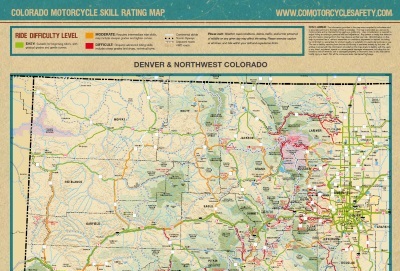
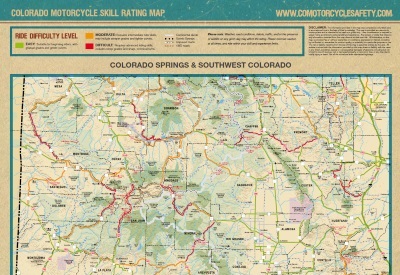
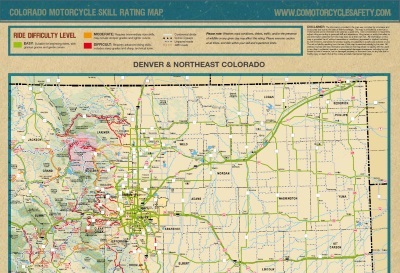
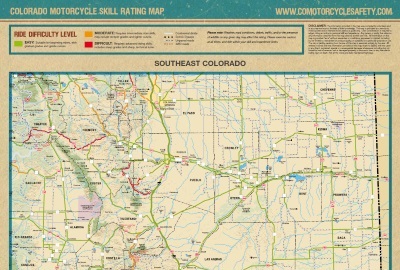
SKILLS RATING MAPS
FAQs
Who is the Colorado Motorcycle Operator Safety Training (CO MOST) program?
CO MOST administers and regulates approved courses that are provided by independent vendors throughout the state of Colorado with oversight by State Patrol (CSP).
Why should I take the course?
To develop your mental and physical skills to be a safe and responsible motorcyclist.
Upon successful completion, you will have practiced on a motorcycle and have tested (knowledge and riding skills) to receive your DMV accepted course completion card.
Course completion cards may also entitle you to an insurance discount.
Do I need to get a motorcycle learner permit before I take the course?
No, however, you must have a valid driver license or a state identification to enroll in a course and attain an endorsement or permit.
What is the registration fee for a motorcycle Beginner Course?
All courses in Colorado are provided by independent vendors. Course prices are therefore set by each vendor. Basic and 3W courses range around $400. Intermediate courses range around $300.
Do I need to have any riding experience?
It is not essential to have any motorcycle riding experience. However, there is a prerequisite that students must be able to ride a bicycle. Students must have the ability to balance and stabilize a two-wheeled vehicle. If you have not ridden a bicycle in a long time, it could be a good idea to get some practice before attempting to ride a motorcycle.
How do I find a course near me?
Click on https://ridesafeco.com/courses/ to find a training school near you.
How do I sign up for a course?
Once you have located a school near you, many provide registration options through their website. You may also call the provider; they will be happy to schedule you into the next available class that fits your schedule.
Which course is right for me?
The Beginners Course (BRC) is perfect for those who are interested in riding. The BRC can also be a great fit for those who have had some prior experience but have not ridden in some time. If you are a current motorcycle rider, but have never taken a riding course, this may also be a good option.
The Intermediate course is designed for current riders: on, or off-road, who may need an endorsement or who want a skills refresher.
The Three-Wheel course is designed for current, or interested riders, of three-wheel rigs: Trike, or Reverse-Trike (Can-AMs). Some schools may offer training for sidecars.
How long does the course take?
The BRC is approximately 15 hours over two days or three days.
The Intermediate course is typically a one-day course.
The Three-Wheel course is typically 9 hours over two days.
Please check with your local training school for scheduling requirements and options.
If I’m under 18 years old, can I enroll in the course?
If you are under 18 years old, you will need the signature of a parent or a legal guardian to take the course.
Ask your local training school if a parent or legal guardian MUST come to class with you to sign paperwork.
What are the age requirements to ride a Motorcycle in Colorado?
If you are under 18 years of age, you must complete a CO MOST safety course and show your completion card prior to receiving your instruction permit.
You must hold your motorcycle instruction permit for 12 months, or until you turn 18 years of age, before you can add the endorsement to your driver’s license.
If you are under 18 years of age, your parent or guardian must sign an Affidavit of Liability and Guardianship for you to be issued with an instruction permit.
Check with your local DMV office, or via https://dmv.colorado.gov/drivers/im-motorcycle-driver, for instructional permit riding restrictions and conditions.
Is a Motorcycle Provided during a BRC?
Yes, for BRC’s a Motorcycle is provided as well as DOT-compliant helmets for use.
Ask your local training school if motorcycles are available for loan or rent during an Intermediate or 3W course.
Please check with your local training school to see if three-wheelers are available for loan or rent during the three-wheel course.
What should I bring to class?
You must provide:
* your valid driver license or state identification card.
* appropriate protective clothing for the riding portions of the course.
Protective clothing includes DOT compliant helmets, eye protection (glasses, sunglasses, or helmet face shield), full-fingered gloves, long-sleeved shirt or jacket, long pants, and sturdy footwear covering your ankles. Please note that these items are mandatory for all riding exercises. You will not be permitted to participate in the course without all required equipment. No rips shall exist on clothing are allowed.
Can I ride my own motorcycle or scooter?
If you are taking the BRC, you may be able to use your own motorcycle.
Ask your local training school if you are interested in using your own motorcycle/scooter in a BRC.
If you are taking an Intermediate course, the class is designed to be ridden on your own personal motorcycle/scooter.
If you are taking a Three-Wheel course, the class typically allows you to ride your own personal rig.
All personally owned motorcycles must have current insurance and valid registration.
All motorcycles used during any CO MOST course must be street-legal and pass a preliminary safety inspection.
Will I get a license after the course?
Upon successful completion (participating in all sessions, passing the knowledge test, passing the riding skills test) you will receive a course completion card.
NOTE: A course completion card is NOT a legal endorsement or permit.
You must present your course completion card to the DMV, to apply for an endorsement without any further testing at DMV.
Will I qualify for the road test waiver if I completed the course in another state?
You must successfully complete a course at a Motorcycle Operator Safety Training Vendor site in Colorado in order to qualify for the waiver benefit.
What if I don’t pass the knowledge or the skills tests?
Each vendor has their own company policies regarding students who do not pass the knowledge and/or skills test.
Please speak directly to your vendor if this situation happens regarding recommendations and/or options.
What happens if I miss a class?
If you need to reschedule before class starts, please call the vendor as soon as possible.
Each vendor has their own company policies regarding students who cannot or do not attend a class session.
When registering for a course, it is expected that students will be on time and participate in all sessions.
CO MOST is unable able to offer any refunds or accept any cancellation notices for students.